
Older Stuff We Got Into This Year
All the rabbit trails we followed in 2025. Books, music, movies. The good stuff.


Books, movies, and music not from 2025 that we loved in 2025:

An Elemental Thing, Eliot Weinberger
I had a hard time reading or writing all of last fall and winter. This collection of Eliot Weinberger essays, which I got at Molasses, broke the hex. Weinberger is the translator/editor who did 19 Ways of Looking at Wang Wei, an important work of translation theory in the form of close reading, and these are short essays about wrens, ice, vortexes, and all kinds of other things that Weinberger knows a lot about. His voice is so assured, and the structure of each is different, and it’s really like he said to himself, You know, I’ve been thinking about this recently, I’m gonna turn it into an essay. Sometimes the essay is a list of fun facts, but the fun facts are like, really, really beautiful. It got me excited about reading and writing again. He also seems like a cool guy. He’s said, “I think of myself more as a furniture maker.” I love that. I just said, helping my brother with his grad school application essays, “This is a puzzle! Think of it as a puzzle.” But maybe I should have said, “This is a chair—think of this as a chair.” —Leah
Alvilda, C’est Déjà L’heure
Very charming old school power pop groupe de filles de Paris. Adore the ecstatic tambourine-y sound and the contrast of the candied rock n roll with the lyrics’ teetering-on-the-edge, foundation-tipping anxiety (hesitations, getting bearings, wrong addresses, suffocating summers, dark freezing winters, Incertitude sur mes deux pieds)—which I’m pleased to report I kind of understand, due to brushing up on my French this year so I can attempt to speak with my Swiss bf’s family. :) They also look really cool and I feel like we’d be friends. —Leah
Baroness, “Chlorine & Wine”
I have a really vivid memory of the first time I heard this song, sitting in a conference room of a co-working space near Times Square that had the words “Come. Sit. Conquer” written on the walls. It was 2015, and I was casually a fan of the sludgy, stoned metal that Baroness was known for to that point, but something about this was impossibly grating. Perhaps it was that there was a barbecue sauce stain on the walls of the room that was there for months that no one cleaned, maybe it was that I was writing 6-8 news posts a day about Foo Fighters for my first job out of college, or perhaps it was just having to commute to Times Square every day. Anyway, couldn’t stand it.
But at some point late last year, I heard it again in the lobby of Metrograph, and it sounded perfect—a proggy take on post-grunge with gloomily indecipherable lyrics really hit in the winter slush, and I have listened to it approximately one million times since. I’ve been on a big kick with Alice in Chains the past few years, and something about “Chlorine & Wine” strikes me as a more extroverted, more earnest version of their big ballads—it’s unrestrained, indulgent, overwhelming. I saw some guy on Reddit compare it to “Bohemian Rhapsody.” That’s probably why I hated it when I was 22, and it’s definitely why I love it now. The rest of Purple is pretty great, too. At this point, I listen to this more than the stuff that got me into Baroness to begin with. —Colin
Barrington Levy, “Too Experienced”
My bf and I listen to a lot of radio. At home, we often tune to Irie Storm (100.7), which seems to be usually this one guy, only in a certain Central Brooklyn radius (in the car, on our way to Costco, it didn’t carry past Crown Heights), and only on the weekends (unless you listen online, where I’ve just learned there is a live chat…!). We like it best when they’re not talking about Jesus, and instead playing really good Motown or deep cut ’80s tracks or the sing-songy commercials for Caribbean restaurants. The DJ we usually hear has a great, raspy, sonorous Jamaican accent and a proclivity for blasting the airhorn several times during a track, doesn’t matter if it’s ’60s pop or something headier. He’s got extremely good taste—his picks never miss. A song he plays a lot (and sometimes sings along to) is reggae artist Barrington Levy’s 1988 hit “Too Experienced,” which is a cover of Bob Andy’s 1972 “Too Experience,” and I have become happily familiar with it. It’s got the quality of a bouncy ball—one with a pink and green gradient and glittery stars inside; something that fits in the palm of your hand and will spring around the room; by which I mean cozy and full of a subdued kinetic energy. Levy’s voice on this track rules. He makes it sound easy. —Leah
Boduf Songs, Lion Devours the Sun, Abyss Versions, How Shadows Chase the Balance
I’m genuinely not sure how I never encountered this record until this year. Boduf Songs is the long-running experimental folk project of Mat Sweet, oft-reviewed on Pitchfork in the aughts and now boasting a long catalog of releases on labels I adore—including ambient tastemakers Kranky, doomer iconoclasts The Flenser, and Orindal Records (the indie stalwart run by Owen Ashworth, who’s one of my favorite songwriters in his own right).
I discovered Lion Devours the Sun while digging for music to play on a Lot Radio show. I was listening to a lot of, like, Codeine and Jason Molina and Mount Eerie and Darkthrone and Ulver while I was working on the songs and wanted to look for music that bridged the gap between that stuff and the more droney stuff I often play when I get a chance to DJ. Somehow, Boduf Songs came up, and it was… perfect. Sweet’s voice is detached and distant, murmuring apocalyptic poetry over doomy acoustic guitars and smoky ambience. It’s like the photonegative of my favorite Grouper stuff, pure netherworld music, and as I’ve dug through the rest of the catalog, I’m not sure if I’ve heard anything as inspiring to me in years and years. I don’t know what he’s up to now—he hasn’t released any music since 2019’s Abyss Versions, but stumbling onto this was the kind of miraculous needle-in-a-haystack moment I’m always searching for when I’m digging. I’m sure I’ll be listening for years to come, and it’s the sort of find that’s kept me digging for new stuff too. —Colin
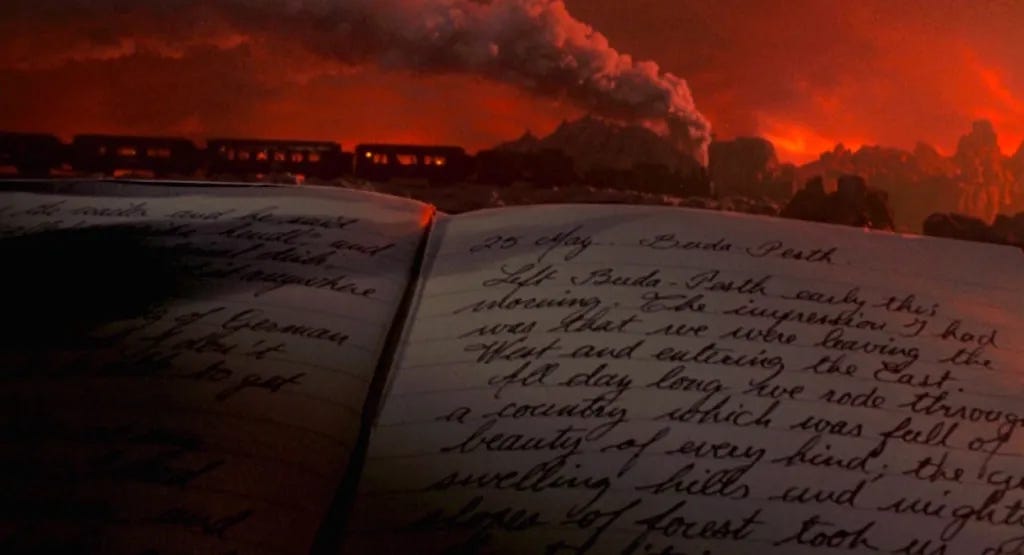
Bram Stoker’s Dracula (1992)
Smack in the middle of an October Wednesday, I scooted to the Paris Theater for a film I’d somehow never seen before: Bram Stoker’s Dracula, directed by Francis Ford Coppola and starring Winona Ryder, Gary Oldman, Keanu Reeves, Anthony Hopkins, also with Tom Waits, Richard E. Grant, Cary Elwes, and Monica Bellucci. (!) I know everyone’s mad about the Netflixification of the theater and all and I get it of course but this was a top-tier movie experience—the popcorn was good, they had Buncha Crunch, I liked that it was just the one screen, the sound was excellent, and I was astounded by the beauty of the film itself. There were also maybe 15 of us there, including a woman and her father, who I could hear quoting lines behind me. The film’s horny reputation preceded it, naturally, but what I was gleefully surprised by was how fucking funny Anthony Hopkins was as Van Helsing. Emerging into the sun afterward was quite a sensation. —Leah
Buckethead, Colma
Look, you probably think of Buckethead as a joke. I did too. I mean, I still do. What else can you make of a towering, mask-wearing, KFC-bucket-toting, shredder best known for a stint in Guns N’ Roses during a truly lost era and a, frankly, deeply annoying song on Guitar Hero 3? He played with a mostly forgotten Les Claypool project and made several albums with Viggo Mortensen. The drummer he works with most often is just called Brain. This is not a serious man.
Except one time he was. I can’t remember how I first heard Colma, but I was immediately struck by how innocent it sounded. It’s definitely still the kind of music nerd stuff that made him a fixture in the guitar magazines I bought as a kid, but it’s sweet. Drawing on Weather Channel jazz fusion and the dubby refractions of trip hop, it’s genuinely strange stuff—I feel like if you told me it was a Fire-Toolz side project, I’d believe you. (Also, Angel, if you happen to read this, I am sure you have strong feelings about Buckethead, and I’m sorry if the first paragraph I wrote here bums you out.) Buckethead wrote Colma for his mother as she was dealing with cancer treatment—he wanted to make something that would feel peaceful and welcoming as she grappled with such a hard time. You can feel it in the music, it’s hopeful and earnest—tonally kind of a Windham Hill thing, if those guys were into Adult Swim or something. I kind of can’t believe he had something like this in him, but I’m still a little scared to listen to the rest of his discography. Tell me if I’m missing out? —Colin
Cynthia Dall, Sound Restores Young Men
Distressed, lo-fi recordings, produced by Jim O’Rourke, add an otherworldliness to the simple guitar songs contained on this 2002 Drag City release. If that sounds like your thing, it probably is, and also, we’d probably be friends. Strange side note, though: it’s the kind of record that immediately made me want to read more about it, and the Pitchfork review is deeply bizarre. It begins with an in-character fantasy about cucking a mayor and a dream about having sex with a mannequin before casting Dall as a “fragile waif,” I guess on the basis of her breathy style of singing. The internet was different in 2003. —Colin
David Grubbs, The Spectrum Between
If you are a fan of any off-kilter rock music from the past 30 years, there’s a good chance you’ve heard something with David Grubbs’ fingerprints on it. He’s a member of or has played with, deep breath, Gastr Del Sol, Squirrel Bait, Bastro, Codeine, [Leah note: Damn, Colin really loves Codeine lol!!] Will Oldham, Royal Trux, Dirty Three, Matmos, Pauline Oliveros, and and and. His Discogs credits for “Instruments and Performance” are five pages long. I finally started working my way through some of his solo music this year, and The Spectrum Between is especially quite good. Stoked to check more of his stuff out next year. Only 38 more solo albums and collaborations under his own name to go. —Colin
Drcarlsonalbion, Gold
I fell in love this year, and since the day we met, I’ve been adding every song she’s ever sent me to a playlist called “Rylie music” because I never want to forget any of it. Literally everything on there is good because Rylie is a curious listener, but I have probably listened to this album the most out of anything she’s sent me. It’s a collection of spaced-out Americana drones from Dylan Carlson from Earth, a band I’ve loved for a long time but never thought to explore outside their mainline releases for whatever reason. It’s really special stuff, and I love it even more because Rylie sent it to me : ) —Colin
The Door, Magda Szabo
Tender-at-heart psychological thriller about the intense and singular relationship between a writer and her housekeeper. Truly bizarre, unnerving, at times disgusting, and ultimately sincerely full of love and concerned with the (political-domestic) lives of women. Had me in a chokehold the whole way through. —Leah
Ghosts, César Aira; Honeymoon, Patrick Modiano; The Lady in the Lake, Raymond Chandler; Troubling Love, Elena Ferrante; Woodcutters, Thomas Bernhard
Accidentally read several books involving (suspected) suicide in a row this summer by a number of my favorite authors. The Aira was almost goofy, as he can be, until it wasn’t. This was one of my least favorite of his I’ve read, though one of the most memorable. The Modiano was a characteristic self-determined detective story, which had a narration style not typical for what I’ve read of him; it switched at times into the past, where it was ambiguously omniscient. The Chandler—I mean, anything I could say about Chandler’s already been said a hundred times, including by Frederic Jameson in his Raymond Chandler: Detections of Totality, which I also read this year. What a scene setter. Ferrante was intense. Almost goofy until it wasn’t—and then it was really, really dark. But the Bernhard. The Bernhard! Woodcutters is the fan favorite for a reason. He’s tender here in a way that he isn’t in The Loser or Old Masters (my favorites, historically), but I can’t put my finger on exactly why. It may just be due to those last few lines, running through Vienna. —Leah
The Haunting of Hill House, Shirley Jackson
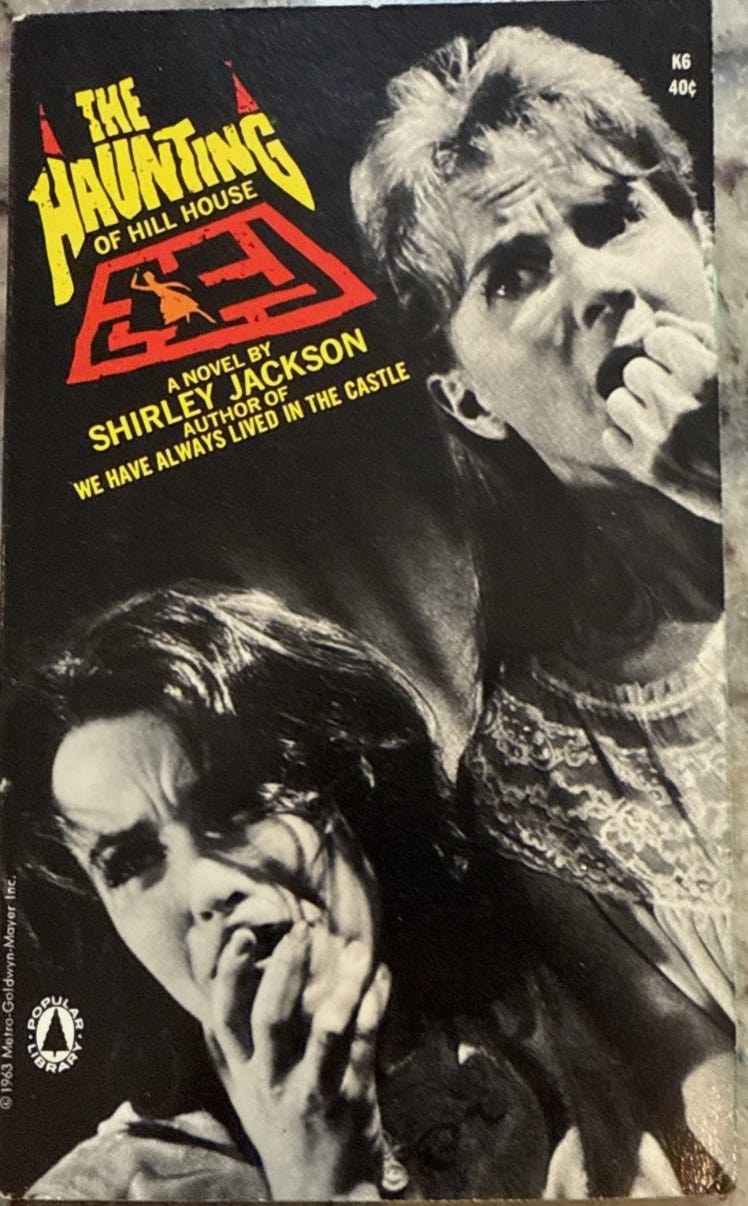
This summer, my boyfriend who I love VERY MUCH wanted to read a scary novel. Shirley Jackson’s The Haunting of Hill House is the 20th-century haunted-house book, and I happened to have a crusty paperback copy with images from the 1963 film The Haunting on the cover, which I got years ago at the Woolly Mammoth in Chicago. We Have Always Lived in the Castle is a favorite, and Jackson is the woman who wrote “The Lottery,” and I love the not-exactly-an-adaptation TV series, so I handed it to him with a confident recommendation despite not having read it myself. He took absolutely forever to finish because he hated it, like, he’d read two pages before bed, and that’s it, and every night after reading his two pages of The Haunting of Hill House, he would shrug and say “Nothing is happening.” Of course, this meant I would read it immediately after he was done, because I simply could not be convinced that nothing at all was happening in Shirley Jackson’s famous haunted-house novel.
We were on vacation by the beach when I started. It took me two or three days, not only because it’s very short but because I became completely entranced, which is also kind of what happens to the characters in the book: they get stuck in the house; they stay willingly in the house even though the house is fucking with them; after a week in the house it begins to seem as if they’ve always been there and always will be.
The narration is ostensibly omniscient, though it stays with Eleanor, a shy and profoundly insecure woman who’s spent much of her adult life caring for her ailing mother, who has recently died. When Eleanor was a kid, she was involved in a supernatural incident to do with the family home, which is the reason she is invited to Dr. Montague’s experimental ghost-hunting slumber party, where she meets Theodora, who she envies, desires, and is desperate to please, and Luke, who she fantasizes, pathetically, about marrying. I suppose there’s not much in the way of action—there are indeed only a few outright haunting events. What mostly happens is that the characters get lost in the house, have strange thoughts and visions, and say nasty things to each other. Eleanor is constantly worrying and having outbursts about being disliked. It’s scary enough to be inside Eleanor’s head; the occasional phantom rappings, hand-holdings, blood-spatters, and mad babblings are rattling, but not the central disturbances. What’s really unsettling is Eleanor’s unease, her deep need for independence and affection and her compulsive rejection of both, how easily her rocky footing is completely dislodged—the implication that there is both something about her and about her place in society (basically, a woman, in 1959, who longs for normalcy and stability but cannot have it and is also umm a tad unhinged) that makes her extra vulnerable to manipulation. The psychological terror is induced so patiently, like it was threaded with a needle up my spine until I was ensconced inside the eerie feeling…how the hell did she do that! Without a single doubt, the scariest book I’ve ever read, even if not a whole lot actually happens. —Leah
Hot Joy, Small Favor
Remember Sports-reminiscent, Charly Bliss-adjacent poppy emotional indie rock from Missouri. Actually feel the landscape’s been missing one of these lately. Great, fun, careening hooks that scratch the itch. I like “Folded Tongue” best. —Leah
Ida, I Know About You; Idaho, The Lone Gunmen; Cobolt, Eleven Storey Soul Departure
I have this habit of sending phone-recorded demos I’m working on to my friends before they’re even close to finished, partly out of excitement and partly out of vanity. Sometimes, hearing that someone else thinks something I did is good is the push I need to actually finish it. Not sure if that’s a bad habit, but it works. Anyway, my friend Daniel told me that one of the half-thoughts I sent his way earlier this year reminded him of Ida, whom I’d never heard of, and I was immediately obsessed after checking out I Know About You. It’s the kind of slowcore stuff I like the best, played with genuine restraint and consideration, just perfect stuff. I don’t really think the song sounds like them, but I wish it did.
Speaking of things I wish I sounded like, I also got really into a couple of other slowcore records this year. I’d heard some Idaho before, but I’d never really checked out The Lone Gunmen. The stuff I’d heard previously was pretty sparse and gloomy, but this record is a lot more lush and open-ended, more like if Wilco made a shoegaze album or something like that. There’s a lot of piano, which I feel like you don’t hear enough of in music like this. It’s really great. And then there’s Cobolt’s Eleven Storey Soul Departure, which is even newer to me. I just heard it when Josh tweeted about it a few weeks ago, comparing it to Codeine, Red House Painters, and emo. That’s Colin bait there. What he didn’t say is that there’s a Eurythmics cover that sounds like the Jesus and Mary Chain, so I will do you that service. —Colin
Josephine Oniyama, “House of Mirrors”
Shazam is the perfect app, I love pressing that big blue button, and how nice that it’s remained largely the same. At some point this year, I heard Josephine Oniyama’s “House of Mirrors” and shazamed it. I have no memory of where I heard this 2012 song, and I can’t find out that much about this artist, but it sounds like it belongs as a centerpiece in a Greta Gerwig movie or an episode of Grey’s Anatomy—complementary!!! —Leah
Killbuck, Killbuck
My friend Uwais is deeply tapped into all sorts of raw and weird indie rock, especially if it comes from Philadelphia, where he lives. I basically trust that anything he sends me is going to be good, and this angsty, distortion-scuffed country rock record from Canton, Ohio, is no exception. The first line in the Bandcamp description implies that they were going to break up, and they haven’t released anything since this album in 2017, so maybe they did. It’s a shame, this is perfect. —Colin
Life: A User’s Manual, Georges Perec
Knowing the Weinberger quote now makes it perfect that I followed his essays up with this thick Perec beauty. Perec, perhaps best known as an OG member of the OuLiPo and author of A Void (novel written without the letter “e”) and An Attempt at Exhausting A Place in Paris (weekend-long study of Place Saint-Sulpice), constructed this novel—his masterpiece, no doubt—as a hybrid chess game / jigsaw puzzle. It’s set within one apartment building in Paris’ 13th arrondissement; each chapter is a room, sometimes the hallway or the stairwell. Almost every time, he begins with a still life—or a diorama snapshot, or a dollhouse cross-section—describing furniture, tableware, knick knacks, containers, sculptures, paintings on the wall. Technically, the book takes place on a June evening in 1975. 8 pm on the 23rd, to be exact. But it stretches back to 1833. Often one object transports us to the past, and by the end we are left with a portrait of several generations of inhabitants. There’s a bit of a mystery threaded through, characters I got excited to return to, and stories within stories I’ve been thinking about since. It feels like an epic, on the intimate level. Paul Auster called it a “crazy-quilt monument to the imagination.” —Leah
Love Torn in a Dream (2000)
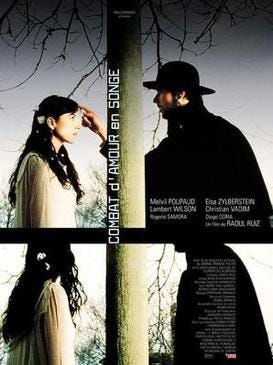
I’ve not seen anything else by the esteemed Chilean director Raúl Ruiz, but this fractured collage of interlocking period pieces blew my mind earlier this year at Metrograph. Stuffed with ideas to the point of hazy incomprehensibility, it’s a genuinely singular experience. Though, actually, it might make for a good double feature with Bi Gan’s new film Resurrection, the only thing quite as sleepily head-spinning that I saw this year. —Colin
Memorial Day 2000 (2002), Junior War (2013), Trash Humpers (2009)
Generally speaking, I find drinking at the movies unpleasant. Never really understood the people in front of me at the Times Square AMC who polished off two bottles of wine during M. Night Shyamalan’s The Visit. (I have a little more sympathy for my friend Ted, who I once witnessed drink four beers during a surgery documentary we watched; it was kind of rough). I dunno, maybe I’m boring, but I just find it kind of hard to pay attention when I’ve had more than a drink or two. Anyway, when Arielle and I went to see this screening of Trash Humpers (accompanied by two similarly debauched documentaries), I broke my rule. We’d been at a not-quite-fully-open-yet Funny Bar where she accidentally set her bag on fire in a candle, which kind of tells you how both of our nights were going already. Turns out there’s no better way to take in this debased American spectacle. It felt like I was meeting the movies where they’re at. I recommend watching Memorial Day 2000 on YouTube. Maybe crack a cold one or two. —Colin
Mick Turner, Tren Phantasma
Another instrumental guitar thing I got really into, alongside the Dylan Carlson record mentioned above. I’ve always been peripherally aware of his long-running main band, Dirty Three, and I love the Will Oldham records he plays on, but this album was a big surprise to me. Both mythic and miniature, misty explorations that remind me both of Durutti Column and the Necks. Don’t really know what it takes to play like this, but I hope to figure it out someday. —Colin
Monsieur Pain, The Third Reich, & 2666, Roberto Bolaño
For a long time, I had no interest in reading Bolaño—something about all the dudes I knew who were obsessed with him. A few years ago, I decided I’d try Nazi Literature of the Americas and found it hard to pay attention. But then I did The Savage Detectives last summer and was staggered; the construction of its pseudo oral history and surrounding diary alone is a confounding architecture—simply the thought of mapping out all those characters and timelines is enough to make me squinch my eyes and swoon. I was taken under the spell.
This year, I read two of his slender works, Monsieur Pain and The Third Reich. The former is about a mesmerist in Paris who is trying to save the life of poet César Vallejo. Enchanting—and where I learned that the word “mesmerize” comes from an 18th-century man named Franz Mesmer who basically invented hypnotism, only he called it “animal magnetism.” The latter is about a German guy so attached to his WWII simulation board game that he brings it on vacation with his girlfriend to Costa Brava and starts teaching it to El Quemado, a burn victim who lives on the beach in a structure made of the pedal boats he rents to tourists. Each so different, and similarly entrancing—these are not stories I’ll forget.
All year, I felt the urge to “Do a long one,” as I kept saying. I’d started Robert Coover’s The Public Burning, but then our friend Daniel said it was “utter garbage,” so I gave it a rest for the time being. He also said 2666 “went nowhere,” but I picked it up anyway, made a pact with my friend Zach to book club it, and then went ahead and devoured the fuck out of the late Chilean author’s epic masterpiece before Zach had made it even 50 pages. I spent seven hours out of an eight-hour flight reading it. Utterly in awe. Now, I certainly understand why people become obsessive Bolaño heads—I feel my conception of reality has changed, like an extra layer was revealed. The prose is addictive. Those beautiful sentences—and the story…the images… His writing creates an aura, and it resonates so hard that the book itself seems a magic object. Sometimes I pick it up and just hold it in my hand. Have not been able to properly read anything else since finishing it in early October. SOS. If anyone wants to discuss, hit my line, it’s basically all I’ve been thinking about. —Leah
The Mysterious Disappearance of the Marquise of Loria, José Donoso
Only book I read in 2025 that was published in 2025, though it was originally written by its Chilean author José Donoso in 1981. About the escapades of a young wealthy widow. Absolute romp, horny as all fucking hell, hilarious and whimsical and weird. Frilly but not flip or flighty. Juicy and also solidly serious about sex and pleasure, and about the fun the book is having. And there’s a bit with a dog. —Leah
Oldstar, On the Run
I wrote about the Oldstar live experience in our last issue, and since I first caught them play, I’ve been obsessed with their 2023 album On the Run. The newer, more country-leaning stuff is really cool too, but this record is the perfect balance of tape-fuzzed slowcore and barred-out Americana. It reminds me a lot of Mojave 3, which is a band that’s felt ignored as source material by all the Duster-heads. Based on the shows I’ve seen, it kinda feels like they’re moving away from this looser, more ambient sound—they had a fiddle player the last time I saw them—but it’s cool that this exists, even if it turns out to just be a transitional moment on the way to the music they really want to make. —Colin
The Rapture (1991)
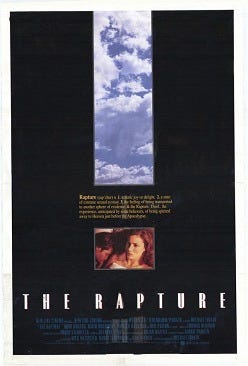
Rylie put me onto this one and, if anything, she undersold how insane it is. Written and directed by Michael Tolkin—best known as the screenwriter of Robert Altman’s The Player and Deep Impact—it’s the story of a telephone operator (played by Mimi Rogers) who abandons her swinger lifestyle after being plagued by visions of the apocalypse. She falls in love with a young David Duchovny and is forced to grapple with whether the end of the world is actually at hand. Truly bizarre tonally, like if Safe and Donnie Darko were the same movie. Not a lot else like it. —Colin
Rejection, Tony Tulathimutte; Ordinary Human Failings, Megan Nolan
I am, admittedly, a bad reader. I don’t really want to make excuses, but it’s always the first hobby to go when the brain is buzzing with words from my day job. Still, I read some really cool stuff this year that my friends wrote. I was especially taken by the debut novels by Sophie Kemp (Paradise Logic), Anika Jade Levy (Flat Earth), and Jeremy Gordon (See Friendship). I feel like, generally, I have a hard time with writing that feels very… contemporary… engaged with the moment or whatever. It’s kind of like how people criticize big directors for not wanting to make movies that show smartphones—that tends to be a world I want to escape from whenever I get around to reading, but each of these books seems to understand in their own way how fried it feels to be living right now. Worth your time certainly, and I’m sure I’d be saying so even if they weren’t my buds.
The two 2024 books I caught up on this year were also by friends. Tony, you’re my friend, right? We rode the Zenobio together this summer, I feel like that counts. I feel like there’s been enough written about Rejection and Megan Nolan’s Ordinary Human Failings that you probably don’t need someone who reads like 10-12 books a year to tell you that they’re both hilarious and moving in equal measure. Still, I am doing so anyway because Leah wrote a lot of stuff about the books she read, and I didn’t want to feel left out.
I also read some music books that were mostly ok. I have a hard time with those because I feel like I could do them better, but I also don’t like talking shit, so that’s all I’m going to say. —Colin
Serpent’s Path (1998)
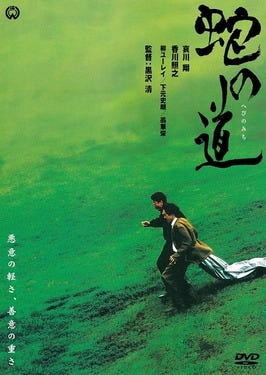
Every Kiyoshi Kurosawa movie I’ve seen makes me want to watch them all, so it was really cool to see this torture-thriller and its 2025 French-language remake (directed by Kurosawa as well) on back-to-back nights at Japan Society. Could we get a full career retrospective going somewhere next year? There’s definitely a certain charm to watching the DVD rips that are floating around, but I feel even further convinced after seeing this that I need to see it in a theater. —Colin
The Signalman (1976)
Every October, I try to do the thing where I watch a horror movie every day. It started as a way of making up for lost time. I was deeply terrified to watch any horror for years because my grandparents let me watch The Shining unsupervised on TBS or something when I was in elementary school. I cried when I watched The Mummy Returns, and please do not try to do the math on how old I was when that came out. Anyway, I’ve gotten over it by watching a million of these things over the last few years. This was my favorite find in this year’s exposure therapy —a story of a railroad operator haunted by a waving spectre, reminding him of disasters passed and warning him of disasters yet to come. It’s from a collection of ghost stories that aired on BBC at Christmas in the ’70s. A lot of the other stuff in the series looks cool too, I’m excited to dig deeper. —Colin
Songs: Ohia, Live: Vanquishers
I’ve been on a huge Jason Molina kick for years at this point, and I’m not sure any of his various projects ever sounded better than on this live recording from the Lioness era. Loose, raw, jammy, these songs unspool in a way that feels unpracticed and unpretentious, just a few guys working things out onstage—finding the magic in the moment. It’s exactly what a rock band should be. —Colin
Straw Man Army, Earthworks
Beautiful, invigorating “spiritual-political” record made by two high school best friends from Chicago who met back up in New York to make punk music. This is the third installation of a trilogy. Missed it when it came out on La Vida Es Un Mus last year, now spinning it at any odd moment. My favorite is “Spiral.” —Leah
transient stellar, rkodr
A lot of newer, hyped shoegaze bands have been dabbling in breakbeats and electronics, it’s cool stuff, but I was kind of sick of people pretending like it’s new. I mean, Pygmalion was full of glitchy IDM ambience in 1996, and it’s probably the best Slowdive album, even if more people are ripping off Souvlaki. I spent a lot of time this year listening to loveliescrushing, and I’ve always admired their drumless, off-kilter approach to these sounds. I was even more excited to uncover this side project transient stellar, which found Scott Cortez aiming for the midpoint between shoegaze, drum and bass, and kosmische all the way back in 2001. It’s clearly pretty raw and experimental, but it still sounds like the future more than two decades later. —Colin
The Weeknd, Dawn FM
Everyone’s talking about OPN’s Tranquilizer right now and I’m still not over his work with The Weeknd, Dawn FM, which at this point has got to be one of my very favorite albums. Concept album about a radio station that plays during your transition to the afterlife, produced by two geniuses (Max Martin and Lopatin), narrated by Jim Carrey, with cameos from Quincy Jones and Josh Safdie, and a feature from Lil Wayne. Abel recites Rilke, for pete’s sake. I have now listened to this album what feels like thousands of times, and when it gets to the end sometimes I run that final track back to hear Jim say one more time, Was it often a dissonant chord you were strumming? Were you ever in tune with the song life was humming? —Leah
White Noise, Don Dellilo
One of those books I’ve been meaning to read for years, and which people have been telling me to read for years, especially my friend Mike, who is typically correct when he thinks I will like something. This spring, the timing suddenly felt right, I don’t know why, but it did, so I scoured the new apartment for the strange copy with the top right corner of Caravaggio’s The Martyrdom of Saint Matthew on the cover (“what the heck is this cover tho,” said Mike). When you have heard a lot about a book and people are always telling you to read it, you build up an expectation of what it will be like that almost always turns out to be wrong. I guess I thought it was going to be like, full-chested and masculine, heavy with plot and statements about what Life Is Like, or something. Not that I have a problem with that. Instead I found it rather ghostly, that the narrative clung cloudlike, vaporous, to itself (like, obviously, the Airborne Toxic Event and the eponymous and constant hum of media intrusions). Haunting in a sticky, ambient way.
One day, in the middle of it, I got on the B38. There was an open single seat, which the woman who got on the bus before me bee-lined for and then suddenly changed her mind, having encountered something there that put her off. I expected a smell, or an unsavory smear. Instead I found six cards with hearses on them lined up along the window like a miniature mass funeral procession. Amused—albeit the superstitious in me a bit hesitant—I took the seat. As I sat, I kept the cards in my periphery, half looking at them as I read White Noise. “YOU may tie your shoestrings in the morning, but the UNDERTAKER may untie them before night,” the cards stated, chanting in unison. And in red, below the hearse, “ARE YOU READY to meet your Maker?”
I reached to grab one right as I started this passage:
“No one there, a hole in space and time. She claims my death would leave a bigger hole in her life than her death would leave in mine. This is the level of our discourse. The relative size of holes, abysses and gaps.” I stuck the card in the book. On the back it said:
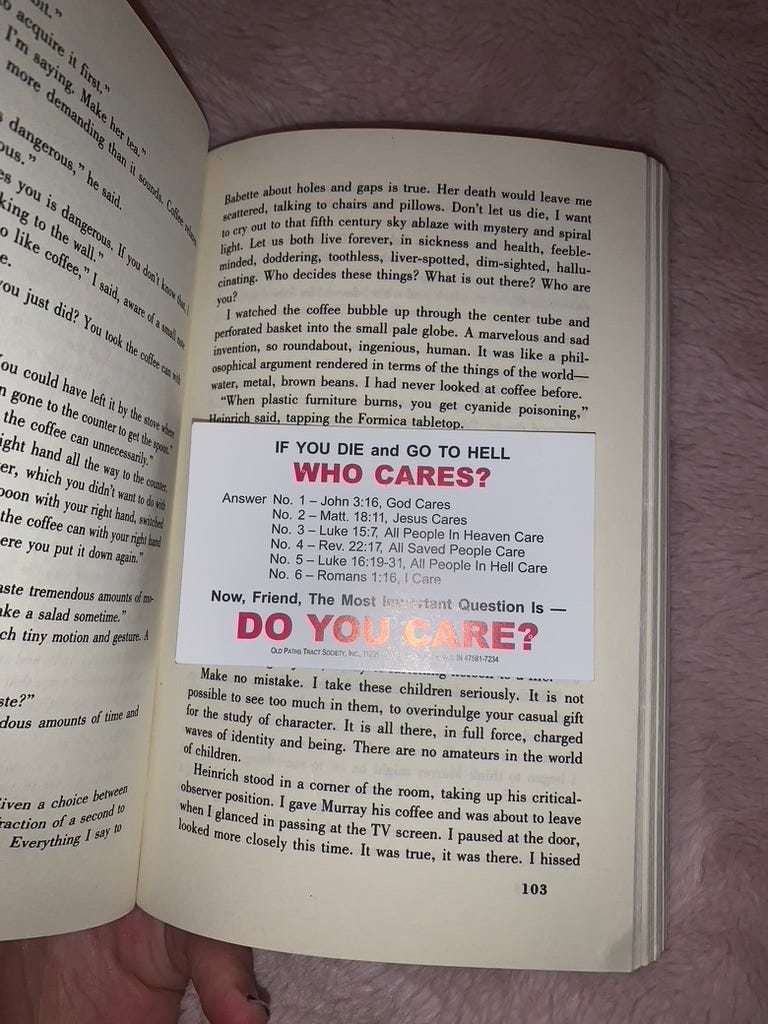
I took another one. I turned the page. “Who decides these things? What is out there? Who are you?” asks Jack Gladney to…whom? Us? Then there is some gorgeous prose about making coffee. —Leah
